Features
The agent's knowledge: site, files, Q&A and your shop
Give each source once; it is re-read on its own schedule. The agent answers from these and nothing else.
The problem
Most tickets are lookups, not problems: where is it, is it in stock, how much. Answering them takes data, not judgement, and stale data is worse than none.
- 01
Seven kinds of source
A website (you pick the pages), one address that keeps changing, files (PDF, Word, Markdown, CSV), manual entries, Google Sheets, Notion, and the Sazito, Digify and Shopfa storefronts.
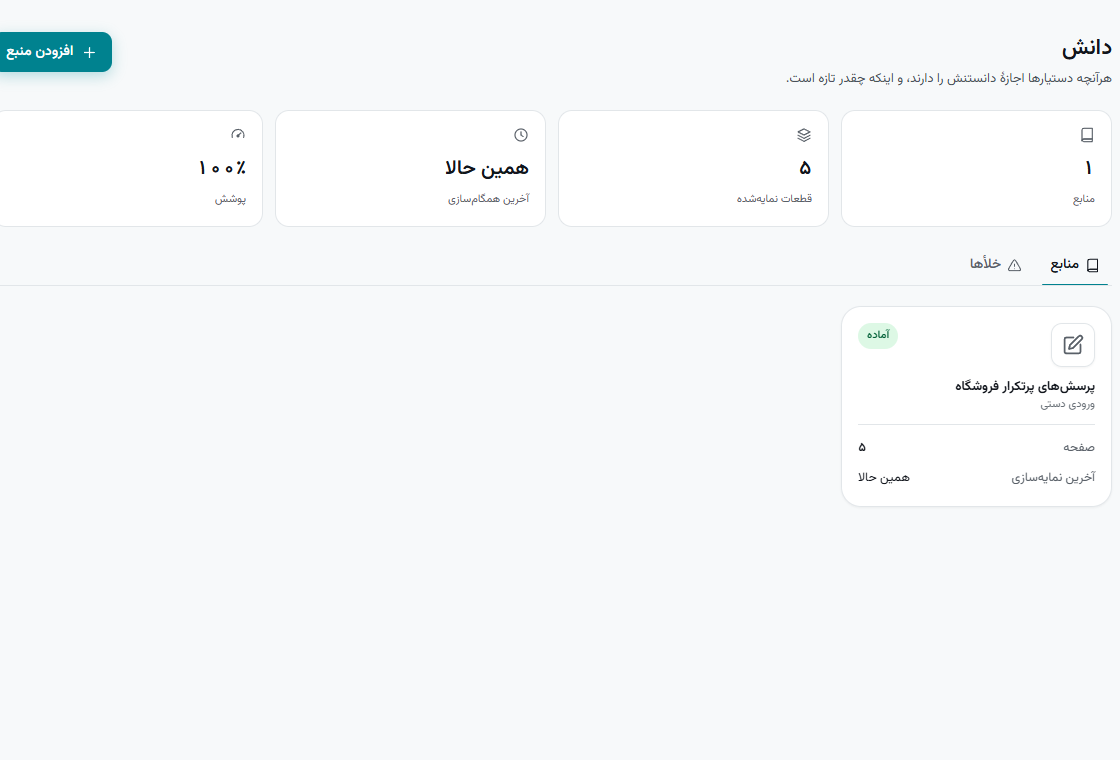
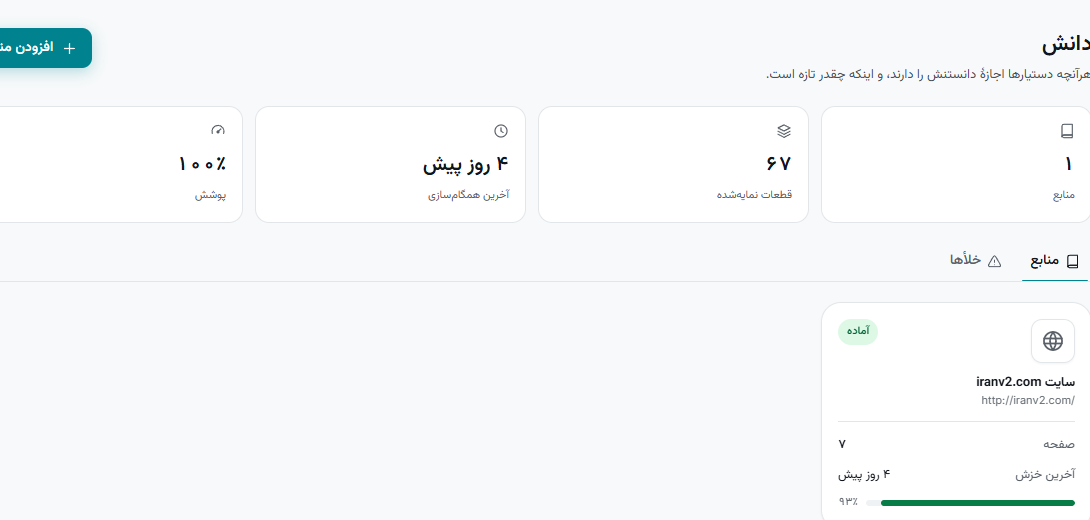
The knowledge page: one card per source with its status, chunk count and last read. - 02
It stays current
Every source that is fetched from somewhere has its own schedule: hourly, daily, weekly or manual only. Crawl history and freshness sit on the source itself.
- 03
Manual entries rank first
The thing nobody wrote down but everyone asks, typed right there. It outranks the rest in answers, and edits whenever you like.
- 04
The questions it could not answer
When the knowledge has no answer, the agent does not invent one; it records the question with how often it was asked. That list is your to-do list, and each row can be answered in place.
Knowledge gaps: what customers asked and we had no answer for.
Typical chatbot
Text pasted in once, stale from that day on.
goya24
Sources re-read on their own schedule, and a list of the questions that went unanswered.
The rest of the product
Your first agent is ten minutes away
Free while you evaluate. Bring your own model keys if you'd rather.