Features
Skills: the things the agent knows how to do
Instructions say how the agent should be. A skill says what to do in one situation: when, in what steps, with which tools, and how it ends.
The problem
"When someone asks about their order, do this" had exactly one place to go: the instructions text. That is why prompts grew to ten thousand characters nobody dared touch.
- 01
One situation, one skill
Each skill has a one-line trigger, its steps, the tools it uses, what it asks the customer for (always with a form), and its ending: an answer, a task for the team, or a hand-off.
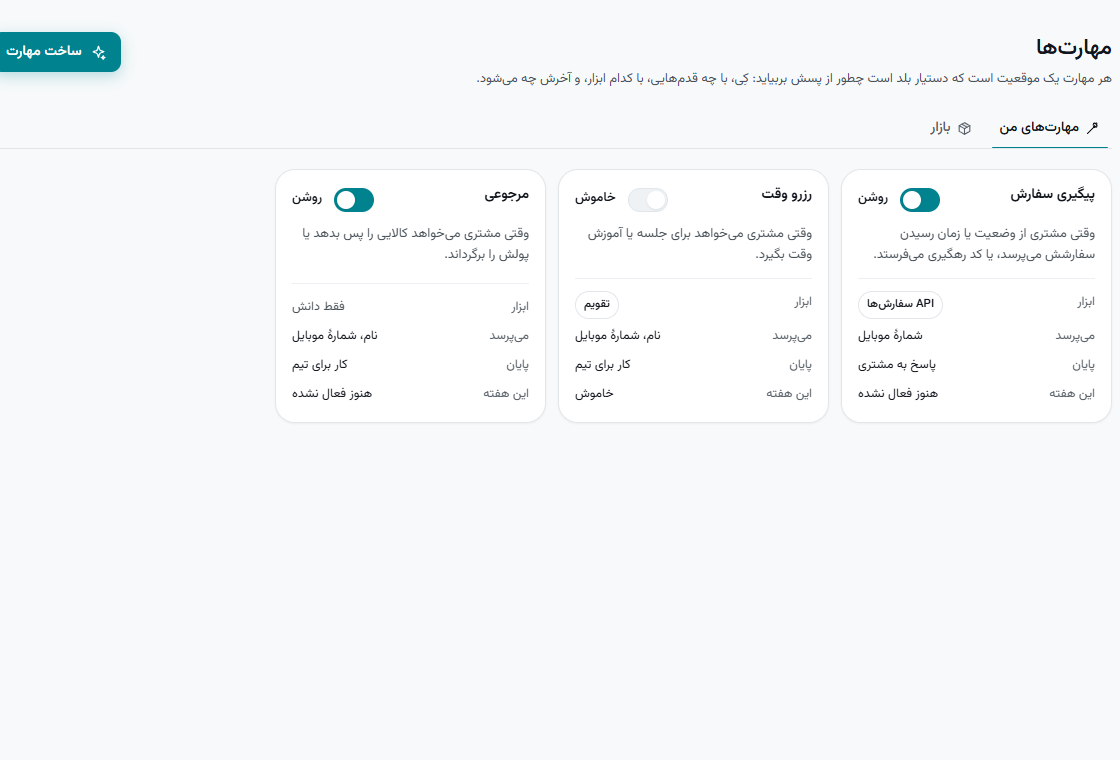
The skills page: one card per skill with its switch and the same five facts. - 02
Building one is a conversation, not a form
«Build a skill» opens the workspace assistant with the ask typed. Say what customers say and what should happen; it writes the steps and shows them before anything is saved.
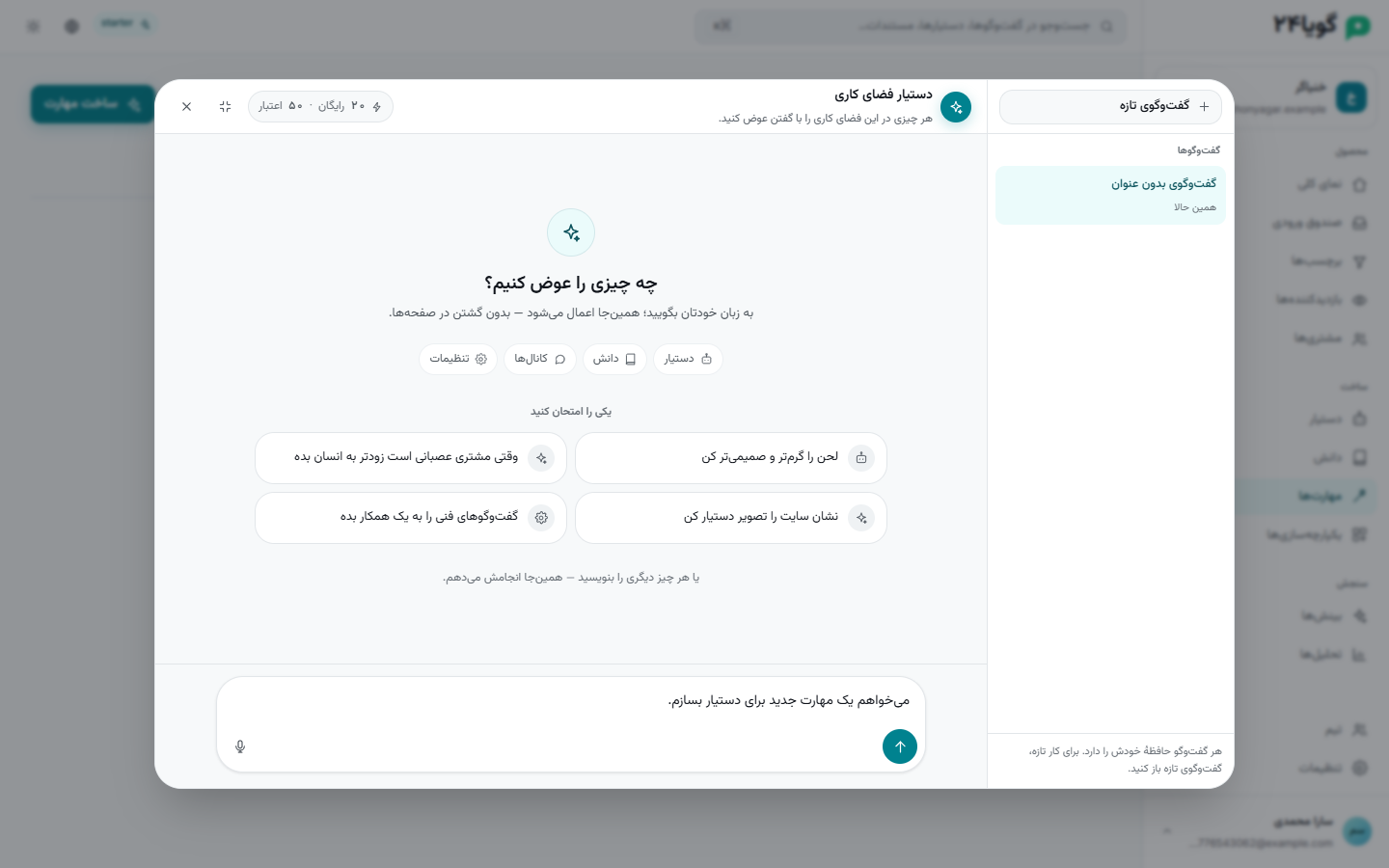
Build a skill: the workspace assistant opens with the ask already typed. - 03
Every skill has its own page
The steps as written, the on/off switch, which agent knows it, and how many times it fired this week and in which conversations.
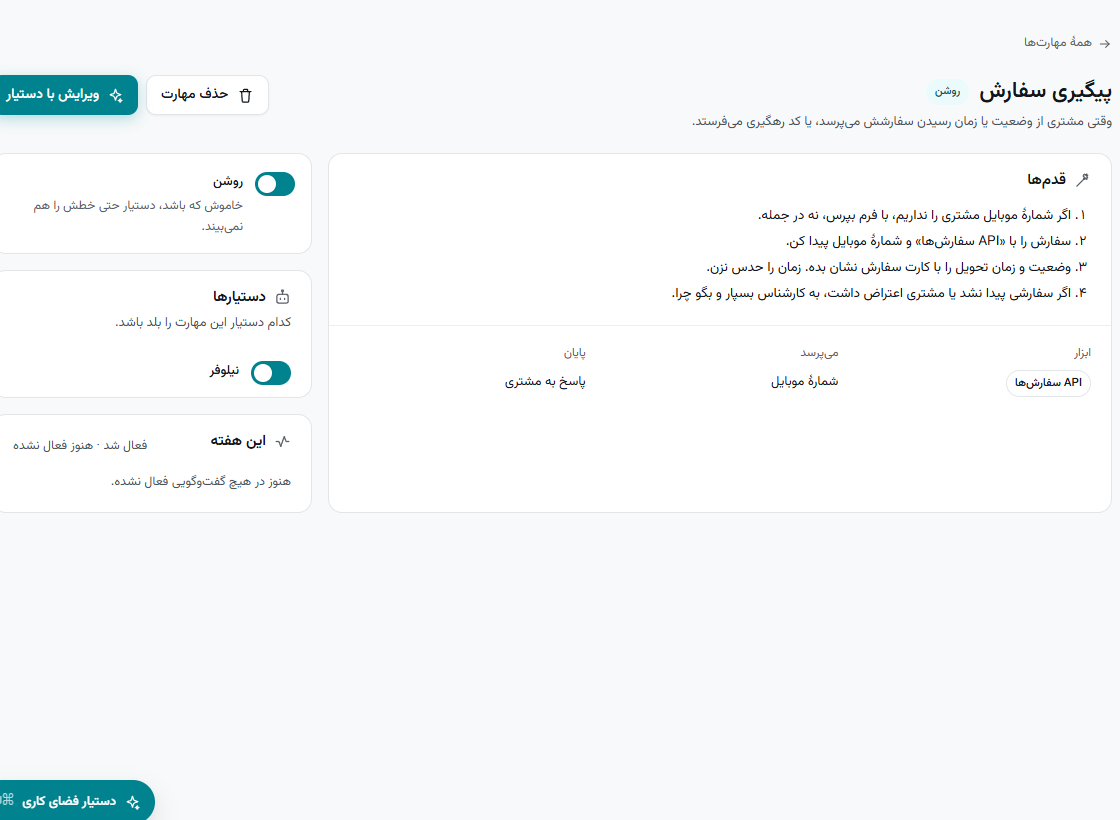
One skill: steps, tools, on/off, agents and this week's activations. - 04
Cheap in conversation
On every message the agent sees one line per skill. When a message matches, it fetches that skill's steps. Fifty skills, fifty lines.
Typical chatbot
One long prompt where every new rule is appended at the end.
goya24
Separate skills, each with its own switch, read only when they are in play.
The rest of the product
Your first agent is ten minutes away
Free while you evaluate. Bring your own model keys if you'd rather.